Lisa Kiepert
04.21.2026
Summary
Contamination rarely starts inside the machine it begins during storage, transfer, and handling long before the lubricant is applied. This article breaks down the key entry points where contamination is introduced and outlines practical steps to control it at each stage. By addressing the full journey of the lubricant, teams can significantly improve oil cleanliness and equipment reliability.
And What to do About it at Every Stage
Most contamination doesn’t start where people think it does.The common assumption? If the machine is clean, everything’s under control.
The reality? Contamination often begins before the lubricant ever reaches the machine and it builds at every step along the way.
If you’re only addressing contamination inside the equipment, you’re already behind.
The Myth: “Our Equipment Is Clean, So We’re Fine”
Clean machines are good. Clean lubricant is better.Contamination is introduced across storage, handling, transfer, and application. If those steps aren’t controlled, you’re feeding your equipment dirty oil and expecting clean results.
That’s not a maintenance strategy, that’s wishful thinking.
Entry Point #1: Storage (Where Problems Start Quietly)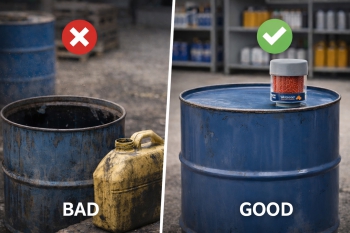
What goes wrong:
- Drums left unsealed or loosely capped
- Standard breathers pulling in moisture and particles
- Outdoor or uncontrolled storage environments
- New oil arriving below required cleanliness targets
- Store lubricants indoors in a controlled environment whenever possible
- Use sealed, dedicated oil storage systems
- Replace standard drum bungs with desiccant breathers to control moisture and particulate ingress
- Filter new oil before it ever enters your system (don’t trust it out of the drum)
- Clearly label and segregate lubricants to avoid mix-ups
Entry Point #2: Transfer (Where Contamination Gets a Free Ride)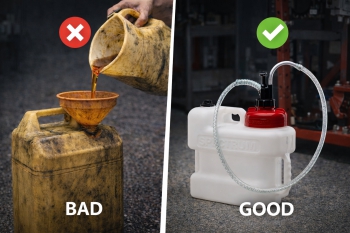
What goes wrong:
- Open containers and funnels
- Shared equipment across multiple lubricant types
- Dirty or improperly cleaned transfer tools
- Human handling introducing dirt and debris
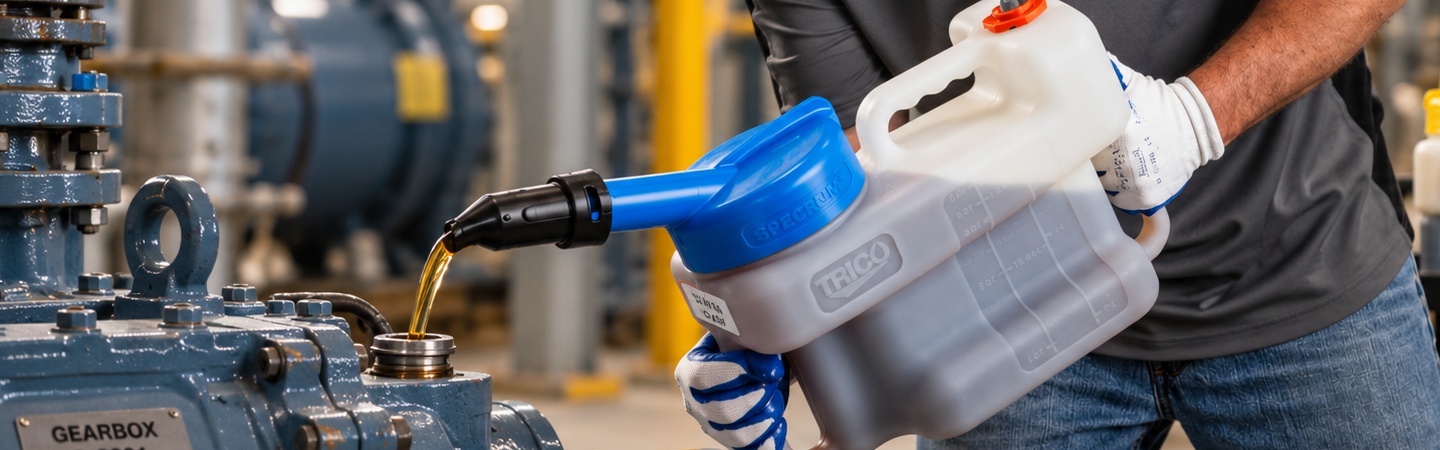
- Use sealed transfer containers (no open buckets or funnels)
- Dedicate containers and tools to specific lubricant types (and label them clearly)
- Implement a color-coded system to prevent cross-contamination
- Keep lids closed unless actively dispensing
- Store transfer equipment as carefully as the lubricants themselves
Entry Point #3: Application (The Last Chance to Get It Right)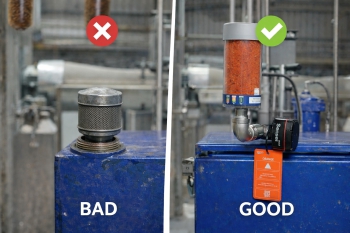
What goes wrong:
- Open fill ports during relubrication
- Worn seals allowing contaminant ingress
- Ineffective or missing breathers
- Pressure changes pulling contaminants into the system
- Upgrade to desiccant breathers on reservoirs and gearboxes
- Inspect and maintain seals regularly, don’t wait for failure
- Avoid exposing systems to open air during lubrication tasks
- Standardize lubrication procedures to eliminate “shortcut” habits
Entry Point #4: Internal Generation (The One Everyone Talks About)
What goes wrong:
- Wear particles from normal operation
- Oil degradation due to heat and oxidation
- Moisture from condensation cycles
- Use proper filtration and condition monitoring
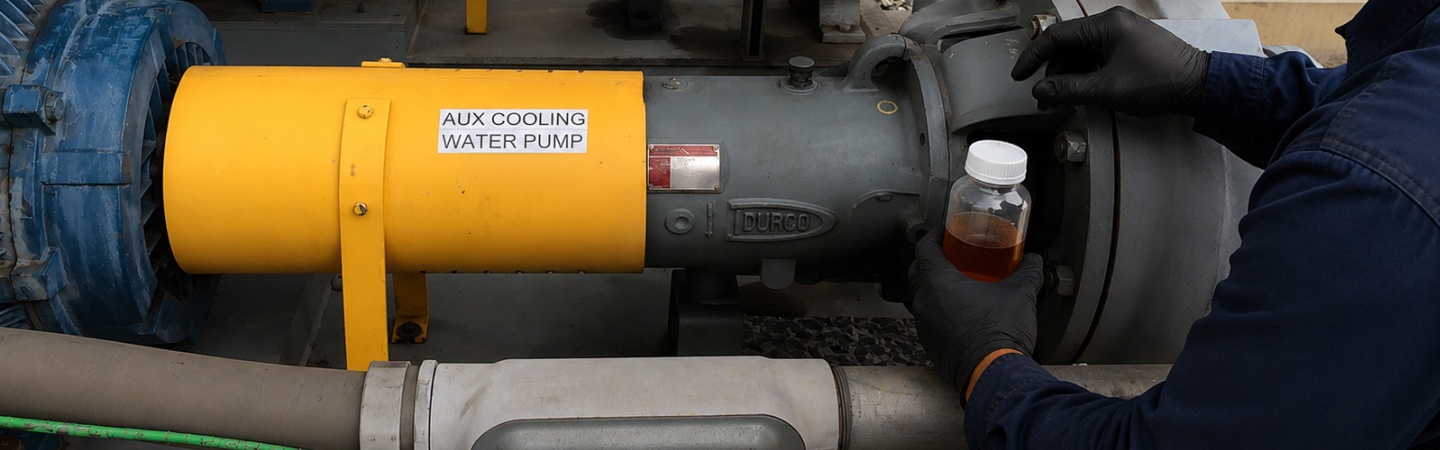
- Track contamination levels through oil analysis
- Address root causes (misalignment, overheating, improper lubrication intervals)
- Control moisture with desiccant breathers and proper sealing
Why This Matters
Most contamination control efforts focus on filtering oil after the fact.That’s like mopping the floor while the pipe is still leaking.
Real improvement comes from controlling contamination at every stage, not reacting to it once it shows up in a report.
The Takeaway
Contamination isn’t an isolated event.It’s a process, one that starts earlier than most teams realize and compounds at every step.
If you want cleaner oil and longer equipment life:
- Control storage
- Standardize your transfer process
- Protect application points
- Monitor what happens inside
Want to make contamination control actually stick?
Start upstream. The biggest wins usually come from fixing the steps everyone assumes are “good enough.”Category:
Tags: