Lisa Kiepert
04.07.2026
Summary
Most oil analysis programs don’t fail in the lab they fail at the sampling point. Taking oil from the wrong location leads to misleading data, false confidence, and poor maintenance decisions. To get accurate, actionable insights, samples must be taken from consistent, live zones using proper methods and hardware.
Because bad data doesn't start in the lab, it starts at the machine.
Most oil analysis programs don’t fail in the lab.They fail long before that, at the sampling point.
You can have the best lab, the best tests, and the best intentions. But if the sample doesn’t represent what’s actually happening inside the machine, the results are just educated guesses.
And unfortunately, that’s exactly what most programs are built on.
Why Sampling Location Matters
Oil inside a system isn’t uniform. It’s dynamic and a little unpredictable.As the machine runs, oil moves through different zones, picking up wear particles, contamination, and degradation byproducts. But that movement isn’t evenly distributed.
- Heavier particles settle in low-flow areas
- Air and turbulence shift where contaminants concentrate
- Flow paths create areas of high and low activity
- Dead zones where oil barely moves and contaminants settle out
- Live zones where oil is circulating and carrying real-time system information
If you sample from an isolated clean area, you’ll think everything is fine right up until it isn’t.
Either way, the data points you in the wrong direction.
The Most Common Sampling Mistakes
This is where most programs quietly fall apart.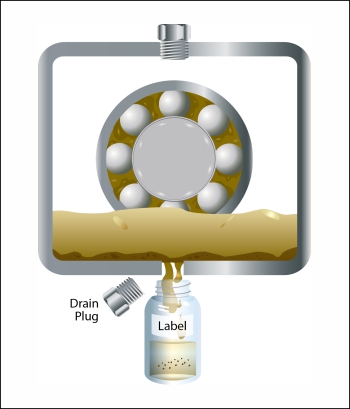
Sampling from drain ports
Easy to access, but they collect settled debris. You’re sampling what’s accumulated, not what’s happening.
Sampling from the top of reservoirs
This is where oil looks cleanest. Unfortunately, that’s not where the problems live.
Sampling after shutdown
The moment a machine stops, particles start dropping out of suspension. You’re no longer capturing operating conditions.
Using whatever port is available
Convenience creates inconsistency. Different locations mean different data every time.
Changing methods between technicians
Small variations add up. Over time, your trends become unreliable.
What “Representative” Actually Means
A representative sample isn’t about grabbing oil, it’s about capturing reality.That means:
- Pulling from a flowing stream where oil is well mixed
- Sampling while the machine is operating under normal conditions
- Using the same location and method every single time
Consistent samples tell you what’s changing.
Where You Should Be Sampling
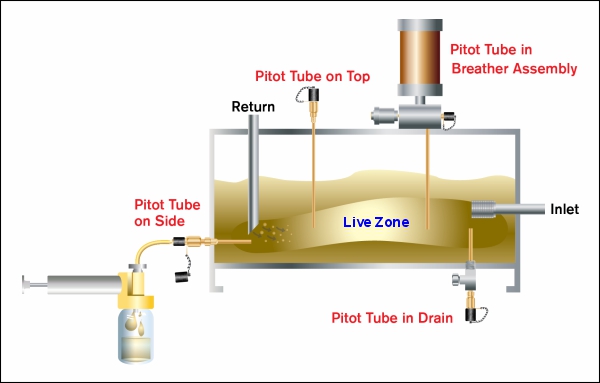
If you want data you can trust, focus on these locations:Live zones in the system
Return lines and circulating paths where oil is actively moving and carrying wear debris
Before filtration
Shows what the machine is generating, wear particles and contamination entering the system
After filtration
Shows how effective your filtration is and what’s actually being delivered back into the machine
Properly placed sampling points in reservoirs
Not from the top or bottom, but from a location that reflects the working oil
The goal isn’t just a “good” location it’s the right one for your objective, used consistently.
The Role of Sampling Hardware
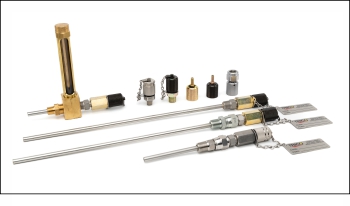 Here’s where a lot of programs cut corners and pay for it later.
Ad hoc sampling methods introduce:
- External contamination
- Inconsistent sampling conditions
- Safety risks
- Unreliable data
Properly installed sampling ports and valves allow you to:
- Sample under pressure and during operation
- Access the correct zone every time
- Standardize the process across technicians
The Bottom Line
If the sample is wrong, everything that follows is wrong.The analysis. The trends. The decisions.
All built on a flawed starting point.
Before questioning your oil analysis results, take a hard look at where the sample came from.
Because more often than not, that’s where the real problem is hiding.
Want Better Data From Your Oil Analysis?
Start by fixing the sampling process.Evaluate your current sampling locations, identify inconsistencies, and implement proper sampling hardware where it matters most. The difference isn’t subtle, it’s the difference between guessing and knowing.
Category:
Tags: