Lisa Kiepert
06.30.2026
Summary
Adding condition monitoring to a maintenance program often raises a fair question: will it create another system to manage and another stream of alerts to review? While there is an initial investment of time to install devices, establish baselines, and train personnel, that effort quickly shifts into measurable time savings. The most effective condition monitoring programs don't replace maintenance teams they help them focus their expertise where it's needed most.
The Reality of Smarter Maintenance
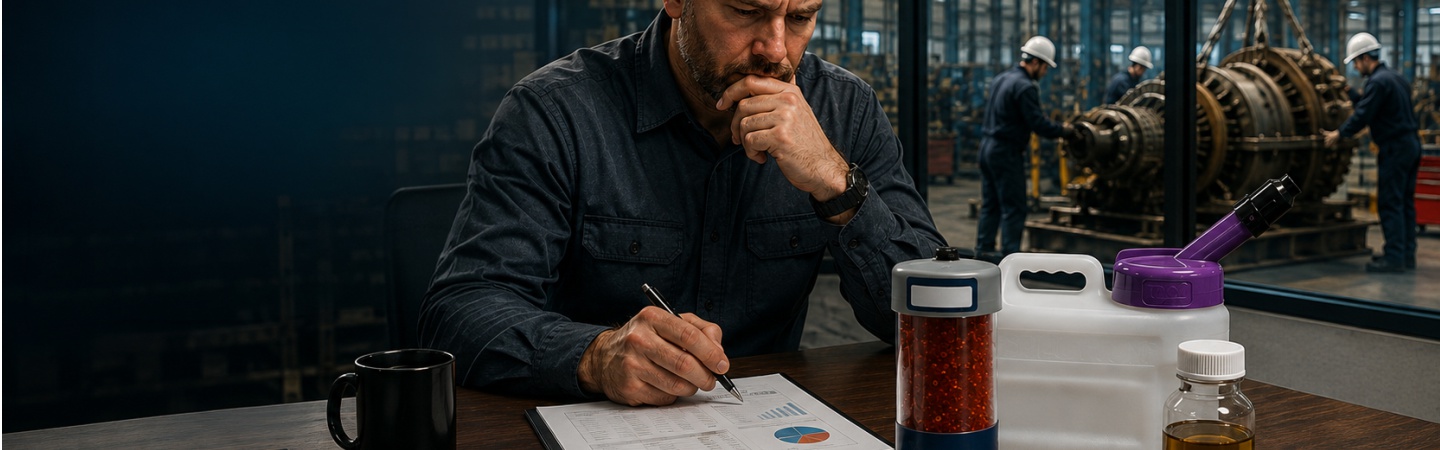
Adding condition monitoring to a maintenance program is often met with skepticism and for good reason.Maintenance teams are already balancing preventive maintenance, emergency repairs, inspections, work orders, and countless other responsibilities. When someone suggests adding sensors, dashboards, and alerts to the mix, the first question is usually the same:
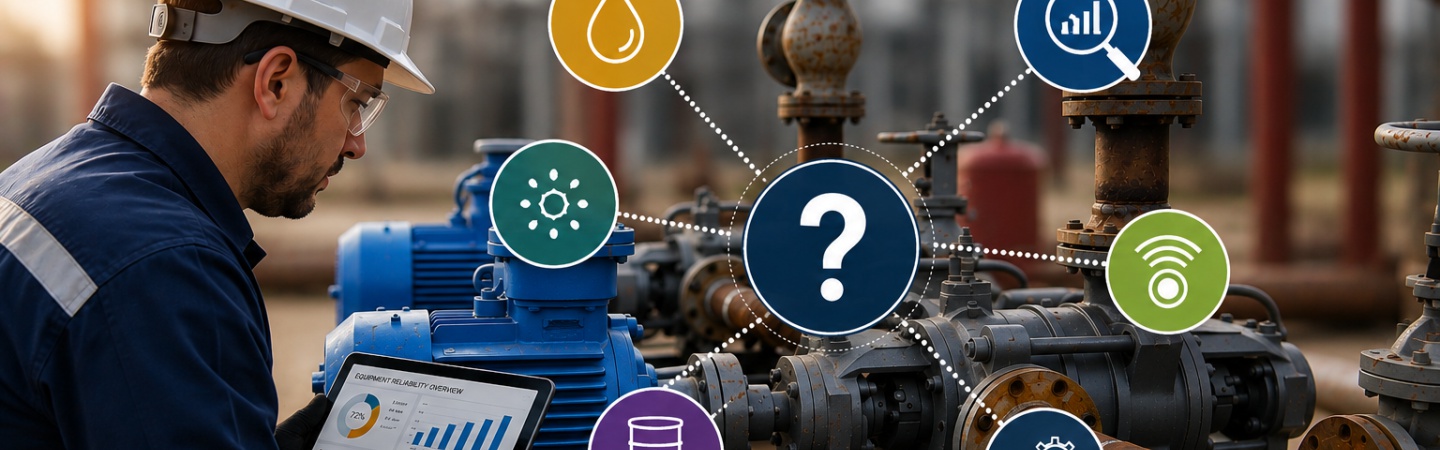
"Is this just going to create more work?"
It's a fair concern.
The honest answer is yes but only at the beginning. Like any improvement initiative, condition monitoring requires an investment of time before it delivers measurable returns. The difference is that the work shifts from reacting to equipment failures toward preventing them.
Why It Feels Like More Work at First
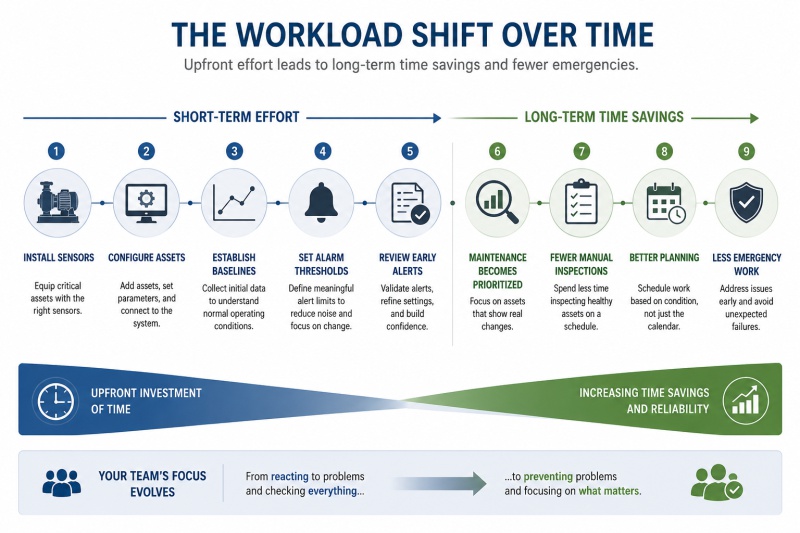
Condition monitoring doesn't become valuable simply because sensors are installed. A successful program starts with building a solid foundation.During implementation, maintenance teams typically spend time:
- Selecting the right assets to monitor
- Installing sensors or monitoring devices
- Establishing equipment baselines
- Configuring alarm thresholds
- Creating notification workflows
- Training personnel to interpret the data
The Shift Happens Faster Than You Think
Once assets are connected and baseline data has been established, the workload begins to change. Instead of following the same inspection route regardless of equipment condition, maintenance teams gain visibility into which assets deserve attention and which are operating normally.Rather than asking:
"What should we inspect today?"
The question becomes:
"Which equipment is showing signs of change?"
That subtle shift changes how maintenance resources are used.
From Calendar-Based to Condition-Based
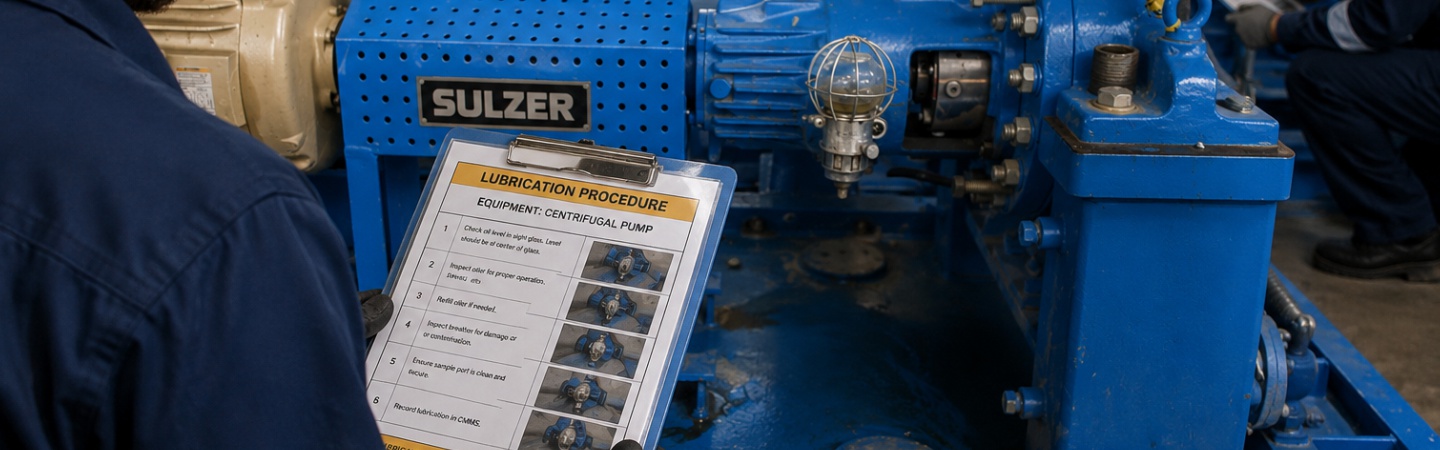
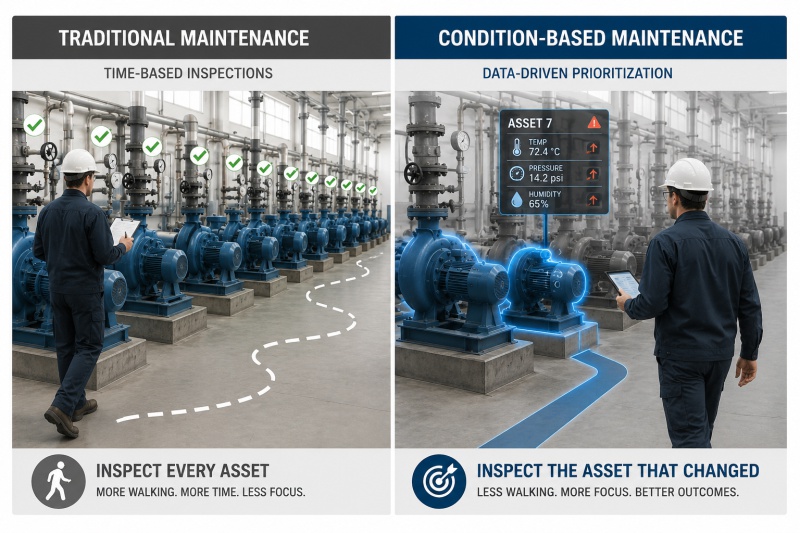
Traditional maintenance programs rely heavily on schedules. Every week, every month, or every quarter, technicians inspect equipment whether anything has changed or not. While routine inspections remain important, they often consume valuable labor inspecting healthy assets simply because they're on the route. Condition monitoring adds context.Continuous measurements such as temperature, pressure, humidity, oil level, vibration trends, or other operating conditions help identify changes between inspections. Instead of replacing preventive maintenance, this information helps maintenance teams prioritize it.
Less Time Looking. More Time Solving.
One of the biggest benefits of condition monitoring isn't collecting more data. It's reducing unnecessary work. Instead of spending hours walking routes looking for problems that may not exist, technicians can focus their attention where it's needed most.Benefits often include:
- Fewer unnecessary inspections
- Earlier identification of developing problems
- Better prioritization of daily maintenance activities
- Improved planning for corrective work
- Reduced emergency callouts
- More efficient use of limited maintenance resources
The Human Element Still Matters
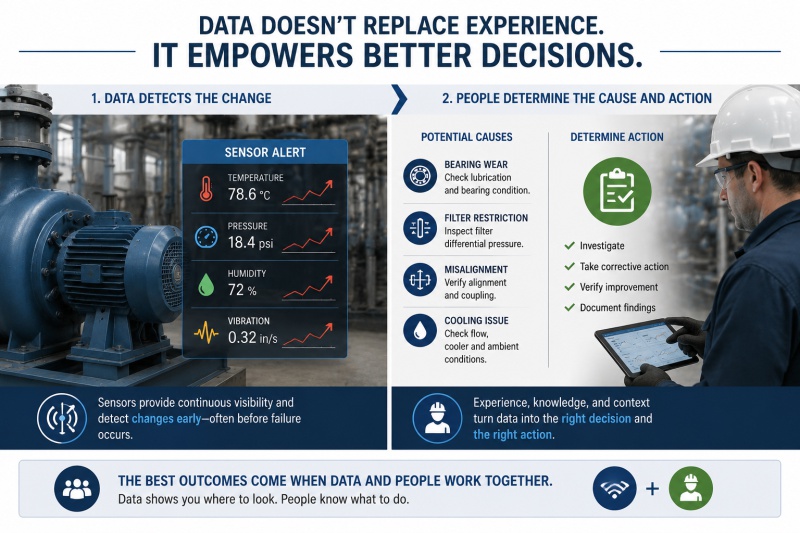
Condition monitoring doesn't replace experienced maintenance professionals. A sensor can identify that temperature is increasing. It cannot determine whether the increase was caused by a recent process change, an installation issue, an operating adjustment, or another mechanical condition without human interpretation.The best maintenance programs combine continuous equipment monitoring with the knowledge and experience of the people responsible for keeping equipment running. Technology highlights where attention is needed. People determine what action should be taken.
Start Small, Learn Fast
One of the most common misconceptions is that condition monitoring must be deployed across an entire facility to provide value. In reality, many successful programs begin with only a handful of critical assets.Monitoring equipment with a history of failures, difficult access, or high production impact allows maintenance teams to become comfortable with the technology while demonstrating measurable improvements before expanding. This phased approach reduces risk while building confidence throughout the organization.
The Goal Isn't More Data
Organizations sometimes hesitate to adopt condition monitoring because they fear being overwhelmed by alarms and dashboards. That concern is understandable. Collecting more data without a clear purpose rarely improves reliability. The goal isn't to generate more information. The goal is to generate better decisions.When implemented correctly, condition monitoring filters out unnecessary inspections, highlights meaningful changes, and helps maintenance teams spend their limited time where it creates the greatest value.
Final Thoughts
Does condition monitoring create more work? Initially, yes.Like any meaningful improvement, there is an investment of time to install equipment, establish
baselines, and integrate new workflows.
But once that foundation is in place, the nature of maintenance changes. Teams spend less time searching for problems and more time preventing them. Instead of adding another layer of work, condition monitoring helps eliminate many of the tasks that consume valuable hours without improving reliability.
In the end, the greatest benefit isn't having more sensors or more data. It's giving maintenance teams the confidence to focus on the equipment that truly needs their attention.
Category:
Tags: