Lisa Kiepert
07.14.2026
Summary
Equipment failures rarely occur without warning. Long before production is interrupted, machines begin showing subtle changes that indicate something isn't quite right. Learning to recognize these early signals and understanding what they mean can help maintenance teams intervene before a minor issue becomes a costly failure.
Recognize the Signals Before Failure
When a gearbox fails or a bearing seizes, the first question is almost always: "What happened?"
The better question is: "What did we miss?"
Because most equipment doesn't fail without warning.
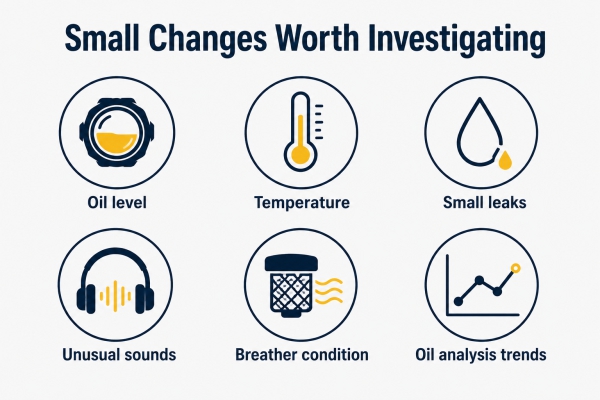
Long before production comes to a halt, machines begin sending small signals that something has changed. A slightly higher operating temperature. More frequent oil top-offs. A darker lubricant. A desiccant breather that reaches saturation sooner than expected. Individually, these changes may not seem significant. Together, they're telling a story.
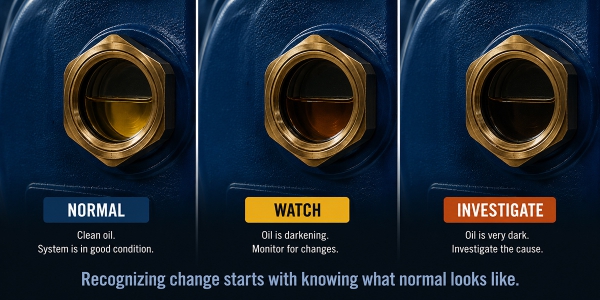
Every Machine Has a Baseline
Healthy equipment has predictable operating characteristics.
- It runs within a normal temperature range.
- Oil levels remain relatively stable.
- Lubricant condition changes gradually.
- Desiccant breathers last a predictable amount of time.
- Even vibration, pressure, and humidity follow expected trends.
Patterns Matter More Than Individual Events
Not every abnormal reading is a cause for concern.A single high temperature reading could be the result of increased production.
One oil sample with elevated wear metals may warrant closer observation rather than immediate action.
A slight drop in oil level might simply be part of normal operation.
But when several small changes begin occurring together, the picture becomes much clearer.
Imagine seeing:
- A gradual increase in operating temperature
- More frequent oil top-offs
- Rising particle counts in oil analysis
- Shorter desiccant breather life
- Increased vibration
One of the biggest threats to equipment reliability isn't a catastrophic event. It's becoming comfortable with gradual deterioration. Small leaks become routine. Frequent top-offs become expected. Dirty sight glasses are ignored. Operating temperatures slowly creep upward. Eventually someone says, "It's been like that for years."
When abnormal conditions become accepted as normal, opportunities for early intervention disappear. Maintenance teams don't intentionally ignore warning signs. Often, they simply become accustomed to seeing them.
Technology Helps You Listen
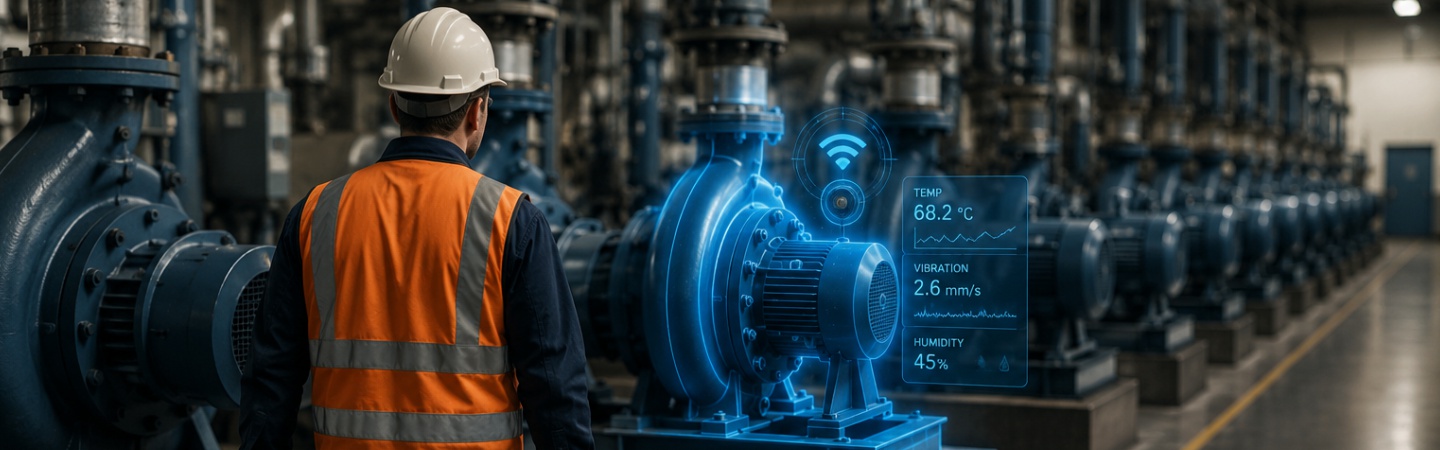
Modern maintenance teams have more tools than ever to understand equipment condition.- Oil analysis identifies changes occurring inside the lubricant.
- Condition monitoring tracks operating trends over time.
- Temperature measurements reveal developing heat-related issues.
- Routine inspections provide valuable visual observations.
Experience Gives the Data Meaning
Technology can identify that something has changed. It can't always explain why. That's where experience becomes invaluable.An experienced technician notices the subtle changes that don't always appear in a report.
- A different sound.
- An unusual smell.
Final Thoughts
Reliability isn't about reacting to catastrophic failures. It's about recognizing change while there's still time to do something about it.
- Every inspection.
- Every oil sample.
- Every temperature reading.
- Every observation.
Category:
Tags: