Lisa Kiepert
06.16.2026
Summary
A lubrication program can reduce failures, extend equipment life, and improve reliability but only if it's built around the right objectives, data, and processes. Before committing time and budget, make sure you have answers to these critical questions.
Ask These 10 Questions
Most industrial facilities understand that lubrication is important.
What many organizations underestimate is how much equipment reliability depends on lubrication practices that occur long before a machine ever starts operating. Lubricants can become contaminated during storage, transfer, application, and operation. Sampling programs can produce misleading data if procedures aren't standardized. Condition monitoring initiatives can generate thousands of alerts without providing meaningful guidance on what actions should be taken.
As a result, many lubrication programs fail to deliver their expected value not because lubrication doesn't matter, but because organizations invest in solutions before fully understanding the problems they are trying to solve.
Whether you're considering contamination control upgrades, oil analysis, condition monitoring sensors, storage and handling improvements, or a comprehensive lubrication management program, answering these ten questions can help ensure your investment produces measurable reliability improvements.
1. What Failures Are We Actually Trying to Prevent?
One of the most common mistakes organizations make is starting with a solution rather than a problem.For example:
- Installing sensors because everyone is talking about IIoT.
- Purchasing premium lubricants without understanding why previous lubricants failed.
- Launching oil analysis without a plan to act on the results.
Ask:
- Which assets fail most often?
- Which failures cause the most downtime?
- Which failures are the most expensive?
- Which failures are recurring?
When you identify specific failure modes, you can focus investments where they will have the greatest impact.
2. How Much Are Equipment Failures Really Costing Us?
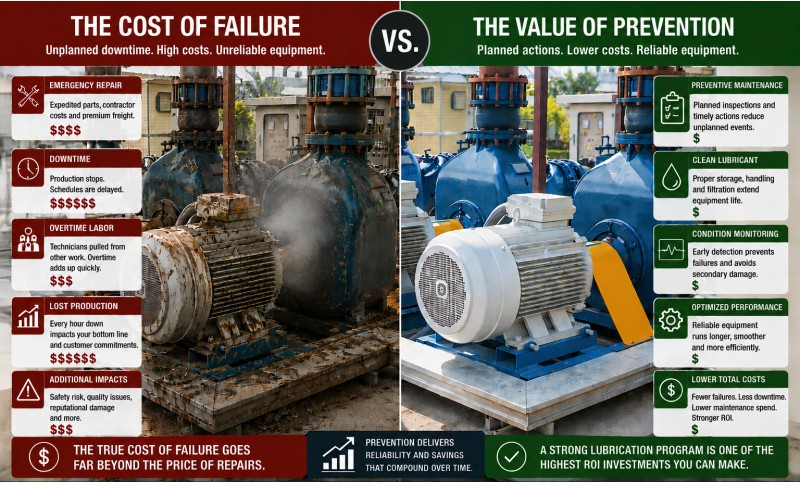
Many organizations know the repair cost of a failed component. Far fewer understand the total business impact. Consider a cooling tower gearbox failure. The replacement gearbox might cost $40,000–$60,000. However, additional costs may include:
- Lost production
- Emergency labor
- Contractor support
- Expedited freight
- Overtime
- Delayed shipments
- Lost customer confidence
3. Do We Have Baseline Data?
If you cannot measure current performance, you cannot measure improvement. Before launching any lubrication initiative, establish baseline metrics such as:- Equipment availability
- Mean Time Between Failure (MTBF)
- Oil consumption
- Contamination levels
- Water content
- Maintenance labor hours
- Unplanned downtime
4. How Clean Is Our Lubricant Today?
This is often the most revealing question. Many facilities assume their lubricants are clean because:
- Drums are stored indoors
- Equipment appears clean externally
- No obvious contamination is visible
Plus, water contamination can reduce lubricant effectiveness, promote corrosion, and contribute to oxidation. Until contamination levels are measured through oil analysis and cleanliness testing, assumptions are just assumptions.
5. Where Is Contamination Entering the System?
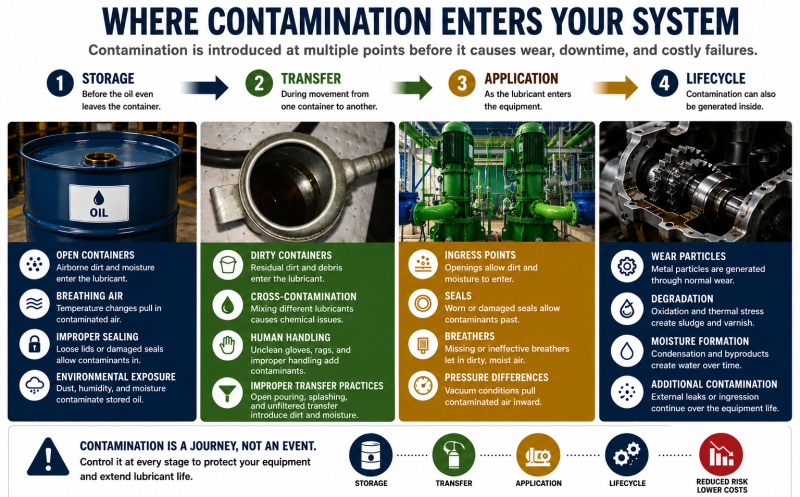
Most people think contamination begins inside the machine. In reality, contamination often starts long before lubricants reach equipment.Common entry points include:
Storage
- Open drum bungs
- Improperly sealed containers
- Humid storage environments
- Shared transfer containers
- Poor labeling practices
- Dirty funnels and equipment
- Missing breathers
- Damaged seals
- Open fill ports
- Moisture ingress
- Process contamination
- Internal wear generation
6. Which Assets Matter Most?
Not every machine deserves the same level of monitoring. A common mistake is trying to improve everything simultaneously. Instead, rank assets according to:- Downtime impact
- Safety risk
- Replacement cost
- Production importance
- Historical failure rates
7. Are We Solving Root Causes or Symptoms?
A failed bearing is rarely the root cause. A failed gearbox is rarely the root cause. The actual root cause may be:
- Contamination
- Improper lubricant selection
- Over lubrication
- Under lubrication
- Misapplication
- Poor storage practices
8. How Will We Turn Data Into Action?
This question has become increasingly important as facilities adopt sensors and connected monitoring technologies. Collecting data is easy. Using data effectively is much harder. Before implementing monitoring technologies, establish:
- Alarm limits
- Response procedures
- Escalation paths
- Ownership responsibilities
9. Do We Have the People, Processes, and Culture to Sustain the Program?
Many lubrication initiatives fail because organizations focus entirely on technology. Technology is only one piece of the equation.Long-term success requires:
People - Technicians who understand procedures and why they matter.
Processes - Documented routes, inspections, and response actions.
Accountability - Clear ownership of responsibilities.
The reality is that contamination control practices, oil sampling procedures, and condition monitoring routines only create value when people consistently follow them.
10. How Will We Define Success?
This question should be answered before implementation begins. Possible success metrics include:
- Reduced equipment failures
- Reduced contamination levels
- Extended lubricant life
- Reduced maintenance costs
- Increased equipment availability
- Improved MTBF
- Reduced emergency work orders
Why Some Lubrication Programs Succeed While Others Fail
Organizations often assume lubrication programs fail because of budget constraints.More often, they fail because:
- Objectives were never defined
- Critical assets were not identified
- Data was collected but not acted upon
- Procedures were inconsistent
- Training was treated as a one-time event
- Results were never measured
The Bottom Line
Before investing in new hardware, sensors, software, filtration systems, or consulting services, take time to answer these ten questions. The answers will reveal where your greatest risks exist, which assets deserve attention first, and which improvements are most likely to deliver measurable results.A successful lubrication program is not defined by the technology it uses. It's defined by its ability to reduce failures, control contamination, improve decision-making, and support long-term equipment reliability.
Looking for additional guidance on contamination control, oil analysis, condition monitoring, or lubrication best practices? Reach out to us for assistance.
Category:
Tags: