Lisa Kiepert
09.29.2026
Summary
Seasonal temperature changes can affect lubricant viscosity, moisture conditions, and the environment inside equipment. Looking at temperature alongside humidity, lubricant condition, vibration, and operating conditions can help maintenance teams understand whether a change is expected or worth a closer look.
Temperature swings can change more than lubricant viscosity
A warm afternoon followed by a cool night may not seem like a maintenance event. But as outside temperatures change, conditions inside equipment can change with them. Looking at temperature alongside humidity, lubricant condition, vibration, and operating conditions can provide valuable context and help maintenance teams recognize when a seasonal change may be telling them something more.A warm afternoon followed by a cool night may not seem like a maintenance event. But as outside temperatures change, conditions inside equipment can change with them.
Lubricant viscosity responds to temperature. Equipment heats up and cools down. Air inside reservoirs expands and contracts. Humidity changes, and under the right conditions, moisture can condense.
None of those changes automatically means something is wrong. But understanding how they relate can help provide a clearer picture of what is happening with both the lubricant and the equipment.
As temperatures begin fluctuating more in the fall, it's a good time to pay attention to what is changing.
Temperature Changes Lubricant Behavior
One of the most direct effects of temperature is a change in lubricant viscosity.As temperature decreases, oil becomes more viscous. As temperature increases, it becomes less viscous. This matters because the lubricant needs to flow where it is needed while maintaining an adequate film between moving surfaces.
During colder conditions, more viscous oil may circulate more slowly, particularly during startup. Equipment may also take longer to reach its normal operating temperature and lubrication conditions.
But ambient temperature is only part of the picture.
A gearbox, pump, bearing housing, or reservoir may heat considerably while operating and then cool after shutdown. That repeated heating and cooling changes the conditions inside the equipment as well.
And temperature isn't the only thing affected.
What Happens When Equipment Heats Up and Cools Down?
Oil-lubricated equipment generally contains an air space above the lubricant known as the headspace.As equipment operates and temperatures rise, the air and other materials inside respond to that change. As the equipment cools, conditions change again. Depending on the equipment and how it is protected, these cycles can result in an exchange of air with the surrounding environment.
That becomes important when the surrounding air contains moisture.
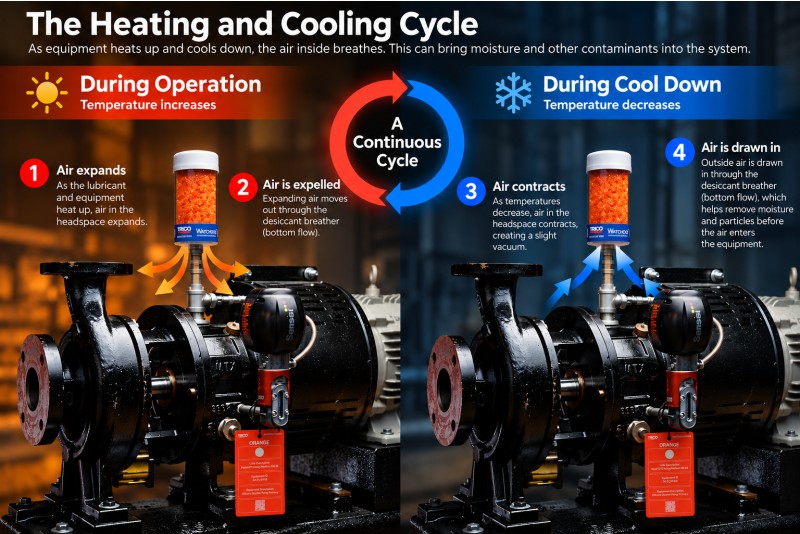
Equipment in humid, wet, washdown, outdoor, or other moisture-prone environments may repeatedly experience changing internal and external conditions. Seasonal temperature swings can make these differences more pronounced as daytime and nighttime temperatures move farther apart.
So what appears to be a simple temperature change can also affect the environment surrounding the lubricant.
Where Condensation Enters the Picture
We've all seen condensation form on a cold surface on a humid day. The same basic principle can matter around industrial equipment.When moist air reaches conditions where it can no longer hold the same amount of water vapor, condensation can form on cooler surfaces. If this occurs inside equipment, moisture may end up where it doesn't belong.
Water can also exist in oil in different states, including dissolved, emulsified, and free water. Temperature influences how much water can remain dissolved in a lubricant, so changing temperatures can affect how a moisture condition presents itself.
That means finding water doesn't always point to an obvious leak or sudden event.
The surrounding environment, equipment temperature, operating cycle, seals, breathers, washdown practices, and other conditions may all deserve consideration when investigating where the moisture came from.
Instead of asking only “How did water get into the oil?”, it can be useful to ask a broader question:
“What conditions were changing when the moisture appeared?”
Don't Look at One Number by Itself
A temperature change by itself doesn't necessarily indicate a problem. Neither does a change in humidity.Context matters.
Suppose internal humidity begins increasing. What is happening with external humidity? How have internal and external temperatures changed? Is the equipment running or stopped? Has vibration changed? Was maintenance recently performed? Does oil analysis show a change in water content or lubricant condition?
Each piece of information tells part of the story.
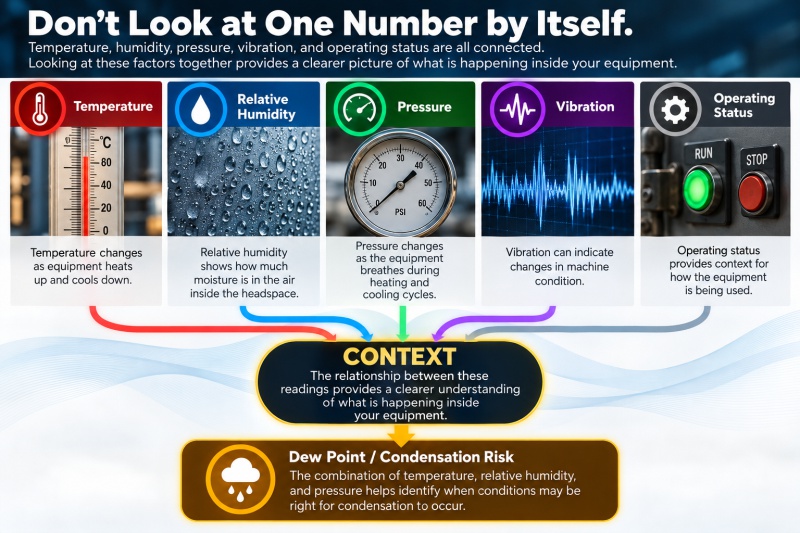
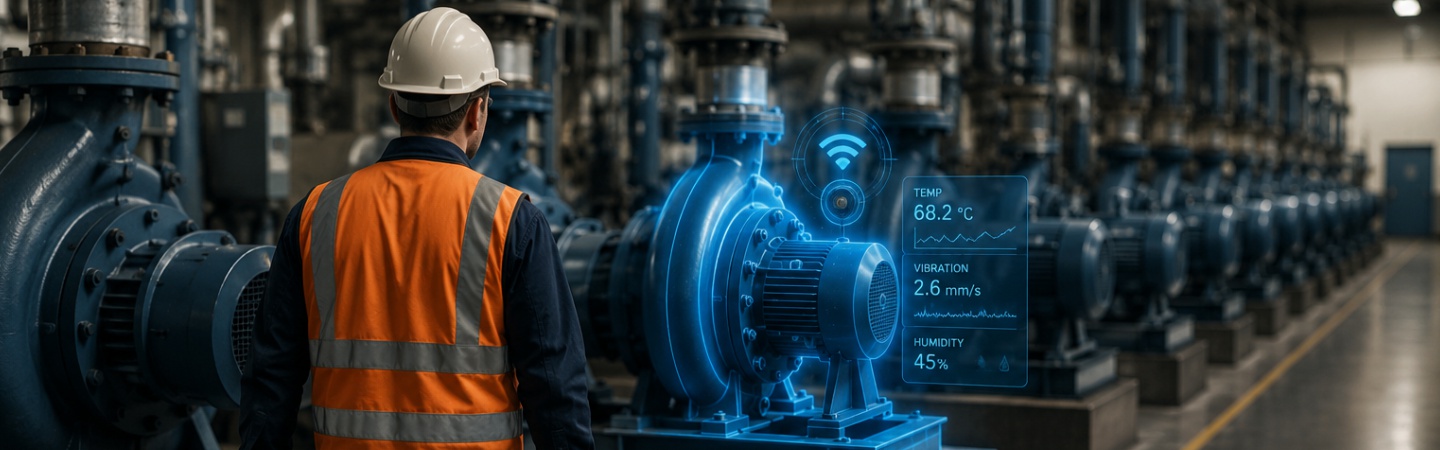
The same applies to an unusual temperature. Increased temperature could have several
possible explanations. Looking at temperature alongside equipment operation, vibration, lubricant condition, maintenance history, and environmental conditions provides more context for deciding what deserves attention.
The goal isn't to collect as much data as possible.
It's to understand what the available information is telling you. Learn how monitoring multiple conditions can provide a clearer picture of equipment health.
Know What's Normal
Recognizing change starts with knowing what normal looks like.A pump or gearbox will have its own typical operating patterns. Temperature may rise after startup and stabilize. Internal and external humidity may normally follow certain patterns. Vibration, pressure, lubricant condition, and other indicators may also establish recognizable trends over time.
Those patterns create a baseline.
Once you understand normal behavior, deviations become easier to recognize.
A change doesn't automatically mean something is failing. It means there may be something worth understanding.
That distinction is important.
Instead of reacting to every unusual reading, maintenance teams can look for trends, compare related conditions, and determine whether the change is temporary, expected, or something that deserves further investigation.
From Observation to Action
Finding a change is the beginning of the investigation, not the answer.First, understand what is happening.
If moisture is increasing, where might it be coming from? If operating temperature has changed, what else changed with it? If viscosity is outside the expected range, is temperature influencing the result, or has something changed with the lubricant itself?
Then determine the appropriate response.
That might mean inspecting a breather or seal, investigating a source of moisture, reviewing lubricant selection, examining an oil analysis trend, inspecting the equipment, or comparing the change with other condition information.
Sometimes the appropriate action may simply be to continue monitoring.
Whatever action is taken, look at what happens afterward.
Did humidity return to its normal range? Did the temperature trend stabilize? Did the next oil sample show improvement? Did the equipment return to its normal operating pattern?
That final step helps determine whether the action actually made a difference.
Understand what changed. Act on what you learn. Validate the result. Use that information to keep improving.
Seasonal Change Can Be Useful Information
The operating environment around equipment is never completely static.Temperatures rise and fall. Humidity changes. Equipment starts, stops, heats up, and cools down. Lubricants respond to those changing conditions.
Instead of viewing those changes independently, look at how they connect.
Sometimes a changing temperature is simply a changing temperature.
Other times, it may be the first clue that something else is changing too.
See Changing Condition More Clearly
Machine Vitals helps provide visibility into changing conditions including temperature, humidity, pressure, vibration, and more giving maintenance teams additional context for understanding equipment condition.Category:
Tags: