Lisa Kiepert
08.25.2026
Summary
An oil analysis report showing high contamination doesn't always mean the contamination came from inside the machine. Dirty sampling ports, inadequate flushing, contaminated equipment, poor bottle handling, and cross-contamination can all introduce particles or residue during sampling, potentially leading maintenance teams to act on a problem that isn't there.
When contamination gets into the sampling bottle
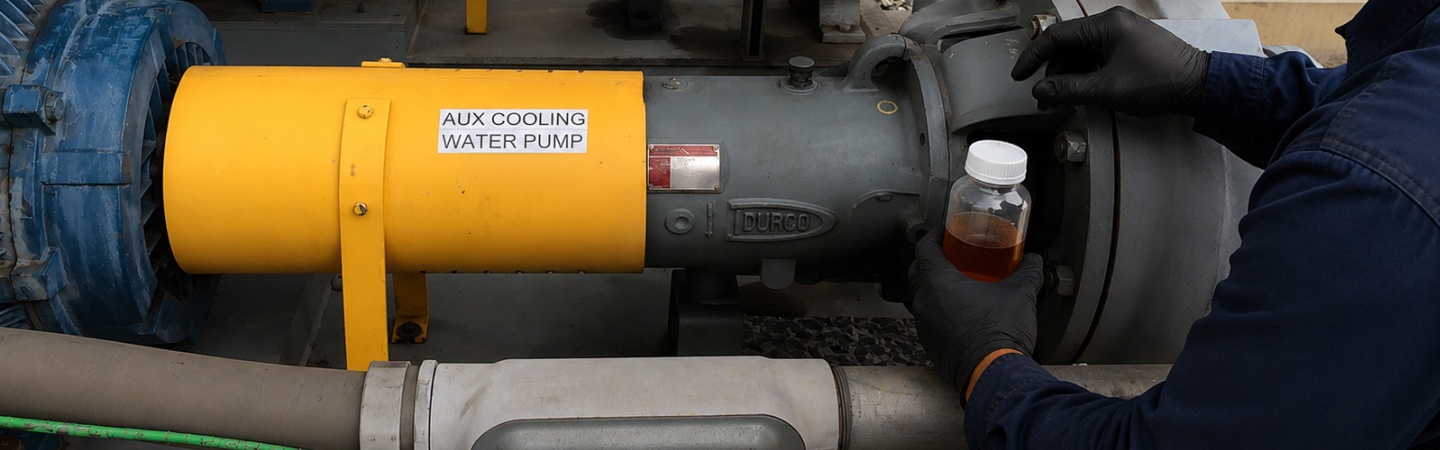
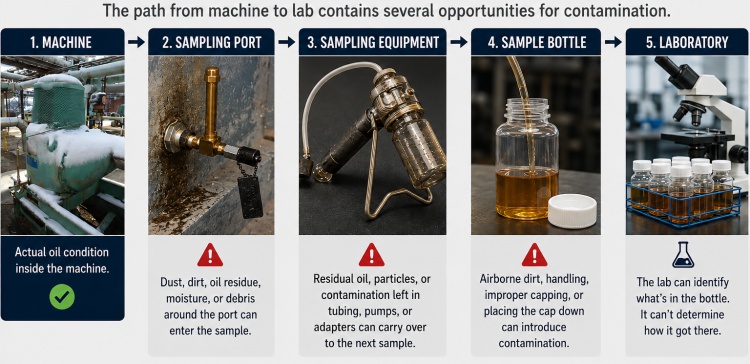
An oil sample is supposed to capture what's happening inside a machine. But there's another possibility worth considering: What if some of what's in the sample bottle wasn't in the machine at all?Between the moment oil leaves the equipment and the moment the bottle is sealed, there are several opportunities for outside contamination to enter the sample.
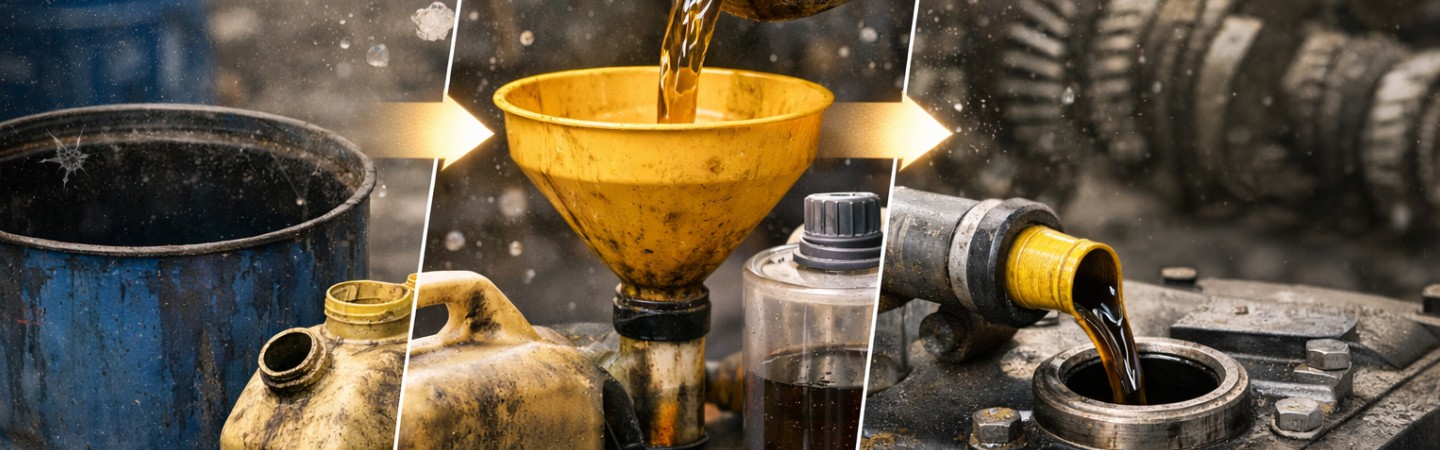
A dirty sampling port. Old oil sitting inside a sampling line. Dust in the environment. Residue left behind in reusable sampling equipment. Even how the bottle is handled can affect the sample.
The laboratory doesn't know how those contaminants got there. It analyzes what's inside the bottle. That makes clean, controlled sampling essential if you want oil analysis results you can trust.

A Small Amount of Contamination Can Change the Story
Oil analysis deals with relatively small concentrations of contaminants and wear material. That's exactly what makes contamination introduced during sampling important. Imagine a sample taken from a hydraulic system with relatively clean oil. The technician wipes the area around the sampling point, attaches the sampling equipment and fills the bottle. Everything looks fine. But if the sampling port wasn't adequately cleaned, the tubing contained residue, or the sampling point wasn't properly flushed, material that wasn't representative of the circulating oil may end up in the bottle.The lab reports elevated particle contamination.
Now the maintenance team has a decision to make.
Is the system becoming contaminated?
Is filtration failing?
Or did the contamination enter during sampling?
Without a controlled sampling process, it becomes much harder to tell.
Sampling Ports Need Attention Too
Dedicated sampling ports make collecting representative samples easier, but having the right hardware doesn't automatically guarantee a clean sample.Sampling points exist in the same industrial environment as the equipment. Dust, dirt, oil residue and other contaminants can accumulate around valves and ports. If that material isn't removed before sampling, it can potentially be carried into the bottle when the connection is made.
Sampling points should be treated as part of the sampling procedure, not simply as a place to attach a bottle or tube. Keeping sampling hardware protected and cleaning the area before connecting sampling equipment helps reduce the chance of introducing external material.
Don't Forget What's Already Inside the Sampling Point
Even when the outside of the port is clean, another source of misleading material may be waiting inside. Oil can remain trapped within sampling ports, tubing or other dead spaces between samples. That stagnant oil may not represent the lubricant currently circulating through the machine. That's why flushing or purging the sampling point before filling the sample bottle is important.The initial oil drawn from the port helps clear residual lubricant and material that may have accumulated between sampling events. Only after the appropriate amount has been flushed should the oil intended for analysis be collected. Otherwise, you may be analyzing the condition of the sampling line rather than the condition of the machine.
Reusable Sampling Equipment Can Carry Problems Between Machines
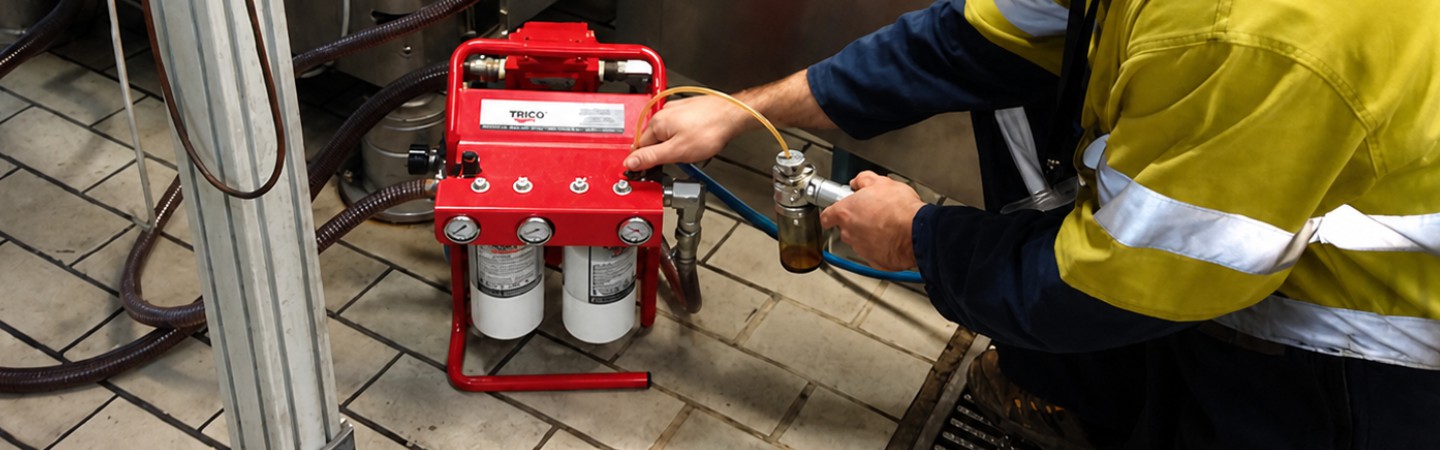
Portable sampling equipment can be extremely useful, particularly when dedicated sampling hardware isn't available. But anything that moves from machine to machine creates another opportunity for cross-contamination.Tubing, vacuum pumps, adapters and other equipment may retain oil or residue from the previous sample. If that material comes into contact with the next lubricant, it can affect the sample. This becomes particularly concerning when sampling different lubricant types or moving between equipment with very different contamination levels.
Consider sampling a heavily contaminated gearbox and then moving directly to a clean hydraulic system. Without appropriate procedures and clean sampling materials, residue from the first machine could influence the second sample. The resulting report may suggest a condition that doesn't actually exist in the hydraulic system.
The Sample Bottle Matters
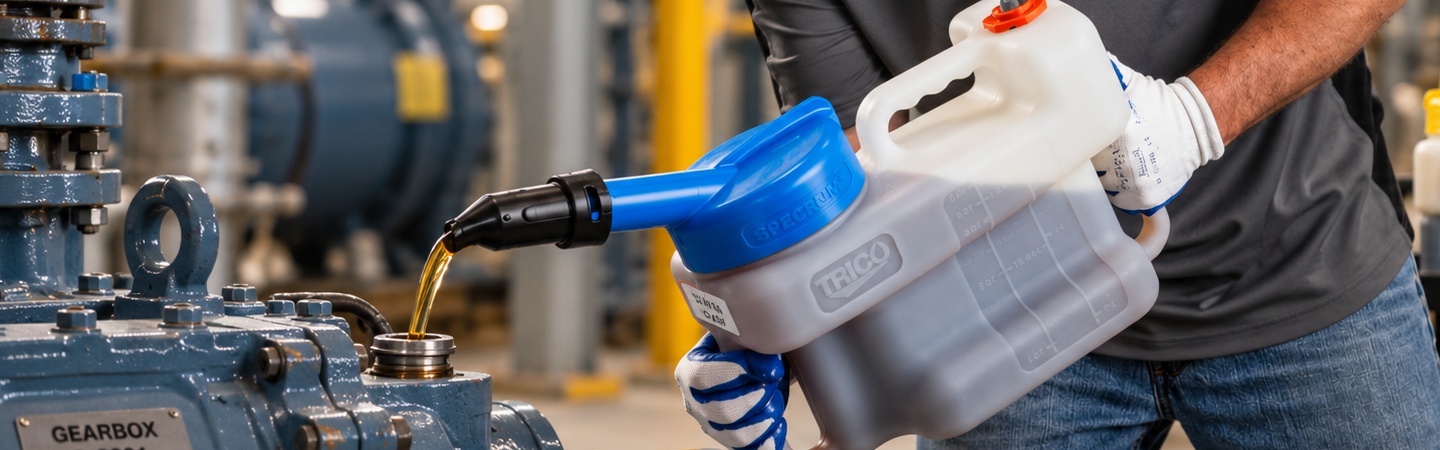
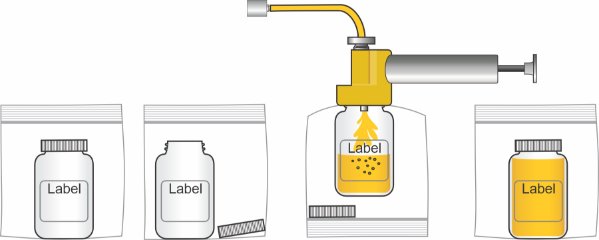
A clean sampling process can still fall apart at the final step. The sample bottle is the environment the oil will live in until it reaches the laboratory. How that bottle is handled matters.Avoid leaving bottles open unnecessarily or setting caps where they can collect dust and debris. Fingers, gloves, dirty work surfaces and airborne contaminants should be kept away from the inside of the bottle and cap.
Once the sample has been collected, the bottle should be closed promptly and securely. It sounds simple because it is. But simple steps are often the easiest ones to overlook when sampling becomes routine.
Watch the Environment Around You
Oil sampling rarely happens in laboratory conditions. It happens next to operating machinery, in dusty plants, outdoors, in production areas and anywhere else equipment operates.Opening a sample bottle exposes it to that environment. That doesn't mean you can't collect reliable samples in challenging conditions. It means the environment needs to be considered as part of the procedure.
Keep the bottle closed until you're ready to collect the sample. Minimize the time it's exposed. Avoid sampling where active maintenance, compressed air, dust or other activities could introduce foreign material into the bottle. The goal is straightforward: Collect what's in the machine, not what's floating around it.
Consistency Helps Expose Questionable Results
Good sampling practices don't just reduce contamination. They also make unusual results easier to investigate. Suppose an asset has maintained a relatively stable cleanliness trend for several sampling intervals and suddenly shows a significant increase in particles. That result deserves attention. But it also deserves context.Before assuming machine condition has suddenly deteriorated, consider what changed:
- Was the sample collected from the normal sampling point?
- Was the point properly cleaned and flushed?
- Was different sampling equipment used?
- Was the equipment clean?
- Were environmental conditions different?
- Was the normal sampling procedure followed?
When results don't fit the established trend, confirming the result with another properly collected sample may help determine whether you're seeing an equipment problem or a sampling problem.
Standardization Removes Variables
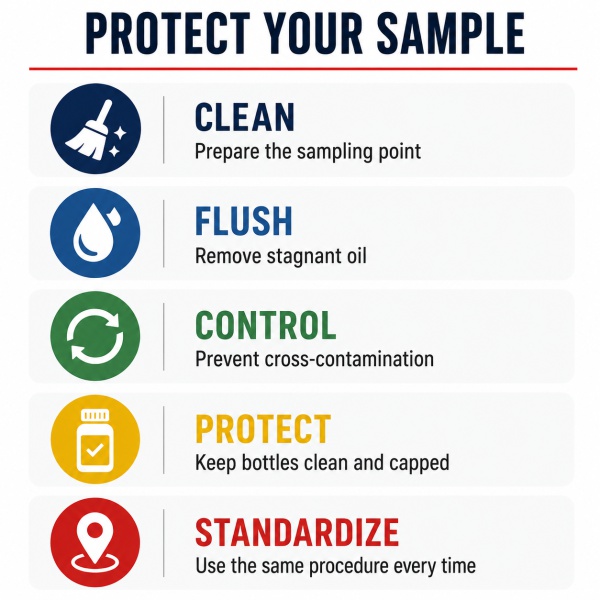
One of the best ways to reduce sampling-related contamination is to make the process repeatable. That means establishing procedures for how sampling points are prepared, how much oil is flushed, what equipment is used, how bottles are handled, and how reusable equipment is managed between machines.Dedicated sampling hardware can also reduce variability by providing technicians with a consistent point of access rather than requiring an improvised method each time.
The objective isn't to make sampling complicated. It's the opposite.
A defined process removes decisions and variables from a task that needs to produce consistent data.
Protect the Integrity of the Sample
Oil analysis can reveal contamination, lubricant degradation and changes occurring inside equipment. But the laboratory only knows what's in the bottle.It can't separate particles generated by the machine from particles introduced by a dirty sampling port. It can't know that residue came from the previous machine sampled. And it can't determine that airborne dust entered while the bottle sat open. That's why sample integrity needs to be protected from the machine all the way to the sealed bottle.
When an oil analysis result indicates contamination, the machine certainly deserves attention. Just make sure the contamination came from the machine.
Category:
Tags: